Nic Sheff
Beautiful Boy: A Father's Journey Through His Son's AddictionNic Sheff’s story is not a straight passage from addiction to recovery but a repeated movement between possibility and relapse. A perceptive, accomplished young man, he becomes dependent on methamphetamine and struggles to sustain sobriety even when treatment, family support, meaningful work, and close friendships are available. His changing circumstances make visible the central tension of the book: recovery can be built through sustained effort, but it cannot be secured once and for all by a single decision or apparent success.
Identity and Early Promise
As a child and teenager, Nic is remembered by his father, David Sheff, as sensitive, sagacious, exceptionally smart, and joyful. The contrast between that remembered boy and Nic’s later behavior under methamphetamine is one of the book’s recurring measures of the drug’s effects. His interests and accomplishments suggest a young person with many ways to imagine a future: he writes for his school newspaper, participates in school activities, and later attends college.
Nic is also the older brother of Jasper Sheff and Daisy Sheff. When he is due home from college for summer vacation, they make welcome-home notes and banners after six months without seeing him. Their excitement establishes the family bond that persists through his addiction, while also showing how his absences and crises affect younger siblings who cannot control what happens to him.
His early writing brings together personal feeling and public argument. Encouraged by a journalism instructor, Nic submits columns to the annual Ernest Hemingway Writing Award for high school journalists and wins first place. Newsweek publishes his account of the emotional cost of long-distance joint custody. In it, he describes the persistent feeling of being separated from someone; the essay gives public form to a strain in his family life rather than reducing his experience to academic or behavioral trouble. These accomplishments stand beside, rather than prevent, the developing crisis of substance use.
From Experimentation to Addiction
Nic later describes a progression that begins with drinking and marijuana and moves through other drugs. After returning from Paris, where he had been drinking heavily, he finds alcohol difficult to obtain as a sixteen-year-old living with his family and begins smoking marijuana daily. After graduating from high school, he takes ecstasy at a party, then uses other drugs, including LSD and mushrooms, before trying methamphetamine. He recalls the first experience as exceptionally powerful. In his father’s account, Nic said he felt he had been searching for methamphetamine his entire life.
The decisive disclosure in the opening family scene comes after Nic returns home from college. He first denies using, but when David Sheff challenges him, he goes to his bedroom and returns with his head down, a backpack over one shoulder, and an electric guitar in his hand. He admits that he has been using since coming home and throughout the semester, then leaves the house. David finds a short, troubled poem among the papers in Nic’s room. Jasper Sheff and Daisy Sheff later run through the house looking for their brother, making the consequences of his departure immediate for the whole family.
Nic’s own explanations for difficulty at college include feeling lost in the impersonal bureaucracy at the University of California, Berkeley. He says he could not obtain a timely counseling appointment and proposes taking a year away from school to work and regain his physical and mental health. His father considers depression as another possible explanation. The book presents that possibility alongside the more difficult recognition that Nic is concealing his drug use; an explanation that feels less blame-laden to his family does not resolve the addiction itself.
Treatment, College, and Repeated Setbacks
Nic’s path includes periods in which he appears sincere and hopeful about recovery. During treatment, he asks whether college remains possible and says he wants to attend Hampshire College. He promises to go regularly to Alcoholics Anonymous meetings, work with a sponsor, and request a substance-free dormitory. He also understands that a relapse would mean David Sheff would withdraw financial support for college. His family considers the proposal, while his father continues to hope that Nic can resume a conventional future.
That hope is repeatedly tested. During another confrontation, Nic’s slurred speech leads his father to recognize that he is high again. In a separate exchange, Nic rages that his father has always tried to control him; the accusation occurs in the context of his intoxication and does not erase the family’s efforts to help him. These scenes show the difficulty of distinguishing Nic’s wishes and grievances from the effects of ongoing drug use, without suggesting that either the conflict or the addiction has a simple explanation.
After a period of severe deterioration in San Francisco, Nic meets family friends arranged by his mother, Vicki. His appearance and the track marks on his arms alarm them, and they urge him to go to New York City with them and detox. Nic agrees, though he uses methamphetamine again before boarding the flight. In New York, a psychiatrist specializing in addiction prescribes sleeping pills, and Nic sleeps through much of the following week as he experiences withdrawal. He describes the accompanying mental state as a mixture of remorse, shame, disbelief, cravings, and despair.
Nic later attends meetings each evening with other Hazelden patients, describing the group with dry humor as a band of grateful misfits. When Hazelden’s New York inpatient program closes, he chooses, with support from his counselor, to move to Los Angeles, where he can live near Vicki. The change of city marks another attempt to build recovery around daily structure rather than relying on detox alone.
Sober Living, Work, and Relapse
In Los Angeles, Nic settles at Herbert House Sober Living Environment, a sober-living program with strict rules, chores, and nightly meetings. He makes friends among the other residents and grows close to Jace, the program’s director. Nic also attends outpatient treatment, sees a psychiatrist, and works with a new Alcoholics Anonymous sponsor, Randy. Randy, sober for more than fifteen years, takes Nic on long bicycle rides along the Pacific Coast Highway and gives him a model of a life Nic believes can be good.
Nic’s recovery work extends into employment. Friends from Alcoholics Anonymous help him find a technician job at Promises in Malibu. He drives patients to meetings and appointments, distributes medication, and assists counselors. The job gives him meaningful responsibilities and a way to help others while participating in a recovery community himself. On the phone, his father hears a version of Nic that seems clear-minded and familiar, an abrupt contrast with the person he becomes while using.
After eighteen months of sobriety, Nic relapses. He later says that he had become overconfident, believing his life was manageable and that he could handle addiction. He is ashamed and says he is attending two meetings a day and must begin the steps again. Randy helps him find another job, and the two resume working through the twelve steps and taking long rides before or after work. The episode shows both the recurrence of the illness and the practical actions Nic takes afterward; renewed effort matters, but it does not erase the relapse.
A later relapse becomes especially devastating because it arrives amid apparent stability. Nic has a girlfriend, enjoys his work and coworkers, has a book deal, and has prospects for magazine work. He also has a close group of friends. His father cannot explain the relapse by pointing to loneliness or dissatisfaction with work. Nic eventually tells him that he is using both methamphetamine and heroin. His mother has reported him missing to the Santa Monica police, and sheriffs are patrolling the family home and a friend’s home after Nic has broken into them. David tells him that the decision to seek help is his and urges him to contact Randy and follow what he has learned in treatment.
Family Relationships and Narrative Significance
Nic’s relationship with his family is shaped by love, fear, conflict, and the limits of parental intervention. His father continues to try to protect and guide him, but comes to recognize that concern cannot substitute for Nic’s own decisions. The younger siblings’ experience appears in small but telling details: Daisy Sheff once describes her brother as a smoky guy, while Jasper Sheff imagines addiction as a devil speaking more loudly than an angel on Nic’s shoulder. The image expresses a child’s effort to understand why his brother acts against what the family hopes for him, without turning Nic into either a villain or a wholly powerless figure.
Nic’s relapses also expose the effects of addiction on those around him. David Sheff describes becoming emotionally dependent on whether Nic is using, while Karen Barbour and the younger children share the uncertainty that each new crisis brings. The family’s attempts to help continue alongside a growing recognition that worry does not cure Nic and can damage the lives of other family members. The book therefore follows not only Nic’s treatment but also his relatives’ efforts to establish boundaries and recover some independence from the cycle.
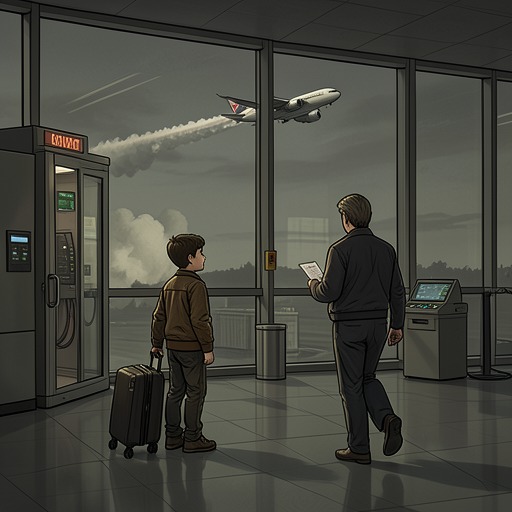
Near the end of the supplied narrative, Nic tells his father that he cannot believe this is his life and that he will do whatever it takes. Vicki picks him up from a hospital in the valley and escorts him through the airport to a flight to New Mexico for treatment. His boarding the plane is a concrete step toward help, not a declaration that recovery is complete. Nic’s arc remains open because the book treats addiction as a chronic illness that can be managed and go into remission but is not cured by a single successful program. His intelligence, work, relationships, and repeated willingness to return to treatment coexist with the possibility of relapse; that coexistence is the defining significance of his story.